
 Business License

How to Select a Sodium Hypochlorite Generator: 7 Key Parameters Every Buyer Should Check
A municipal water utility bought a sodium hypochlorite generator based on chlorine output alone, without examining the feed water quality requirements in the technical datasheet. Six months into operation, the cell scaled so badly that output dropped by 30%, and the maintenance crew was acid-washing the unit every three weeks. The vendor blamed the water; the utility blamed the vendor. Replacement softener hardware and a year of extra maintenance cost roughly $45,000 — more than the generator itself.
Selection mistakes like this are common because on-site generators look deceptively simple. In reality, the machine is only one half of the system; the brine, water, power, and storage infrastructure around it determine whether it runs for eight years or fails in eight months. This guide walks through the seven parameters that separate a well-specified sodium hypochlorite generator from a costly mistake.
1. Chlorine Output Capacity: Match the Generator to Real Demand
Output capacity is the most quoted specification, usually expressed in kilograms of equivalent chlorine per day (kg/day Cl₂). Sizing requires an honest demand estimate, not a number copied from a similar plant. A wastewater plant that doses 2 mg/L into a 50,000 m³/day flow needs roughly 100 kg/day; a cooling tower circuit with seasonal biofouling may need twice the summer dose of its winter baseline.
Buyers commonly make two errors. Undersizing forces the unit to run at maximum output continuously, leaving no time for cell cleaning or maintenance, and shortens anode life. Oversizing by a wide margin means the generator idles at low load, where efficiency drops and the product tank holds stale hypochlorite that degrades. A practical rule is to size for the peak day, not the average day, and add 10% to 20% headroom, then verify the unit can throttle down to the minimum demand without cycling too frequently.
In our experience, demand should be projected over the full year, including seasonal peaks. Tropical utilities with strong wet-season disinfection loads sometimes forget that their peak is exactly when delivery logistics are most disrupted, which is the very problem on-site generation solves.
2. Output Concentration: 0.8% vs 12% vs 15%
Generators fall into two concentration families, and the choice shapes the entire plant layout. Low-concentration units produce 0.6% to 0.8% available chlorine in a single pass and dose the product directly into the water stream. They are simpler, cheaper per unit of capacity, and consume roughly 4.0 to 5.5 kWh per kilogram of chlorine. Their cost is footprint: a 100 kg/day demand needs about 12,500 liters of storage, since the product is 98% water.
High-concentration units produce 12% to 15% NaClO through a recirculating cell loop with integrated cooling. They cost more and draw 5.5 to 7.0 kWh per kilogram, but storage shrinks by more than an order of magnitude. A facility with limited floor space, or one that wants a multi-day buffer against generator downtime, usually picks the high-concentration route.
| Parameter | 0.6–0.8% generator | 12–15% generator |
|---|---|---|
| Storage volume for 100 kg/day demand | ~12,500 L | ~700–850 L |
| Specific energy | 4.0–5.5 kWh/kg Cl₂ | 5.5–7.0 kWh/kg Cl₂ |
| Relative capital cost | Lower | Higher (cooling, recirculation) |
| Typical users | Municipal water/wastewater | Industrial, space-constrained sites |
The concentration decision cascades into pump sizing, tank material, and dosing control. It is worth settling before requesting quotations, because the two types are not interchangeable without replacing the cell assembly and adding a chiller circuit.
3. Salt Consumption and Salt Quality Requirements
Salt is the daily consumable, and its cost accumulates quietly. The stoichiometric minimum is 1.65 kg of salt per kilogram of chlorine, but practical consumption runs 3.0 to 3.8 kg/kg due to brine carryover and incomplete reaction. At a salt price of $0.10/kg, that difference alone moves annual operating cost by thousands of dollars at a 100 kg/day plant.
Salt quality is the parameter buyers most often underestimate. Vacuum-grade salt with at least 99.5% NaCl and combined calcium plus magnesium below 20 ppm keeps the cell clean and the anode coating intact. Solar salt, cheaper by roughly $0.06 per kilogram, carries calcium, magnesium, and sulfate impurities that foul the cathode and accelerate electrode wear. In our project records, plants running untreated solar salt acid-clean cells roughly three times more often than plants on vacuum-grade salt.
Ask the vendor what salt specification the generator requires and what happens if you feed salt at the next lower quality grade. If the answer is vague, treat that as a warning sign. The salt handling and brine preparation system should also be quoted — softener, saturator, transfer pumps, and level controls — because they are often the difference between a turnkey plant and a pile of components.
4. Specific Energy Consumption: The Quiet Operating Cost
Electricity is the second daily consumable. Specific energy consumption is quoted in kWh per kilogram of equivalent chlorine, and honest figures range from 4.0 to 7.0 kWh/kg depending on concentration family and design. At $0.10/kWh and 100 kg/day, a difference of 1.5 kWh/kg is roughly $5,500 per year — over a 10-year life, $55,000, which can exceed the generator's capital cost.
Energy consumption is not a fixed number; it rises as the cell ages and as feed water quality degrades. A new cell drawing 4.5 kWh/kg may draw 5.3 kWh/kg after four years as the coating wears and scale accumulates. Compare quotations at the same basis — new-cell and end-of-life figures — and ask whether the vendor's quoted number is measured or theoretical.
Temperature also matters. Colder feed water raises cell voltage and energy use; a generator running at 15°C consumes roughly 10% more than the same unit at 25°C. Sites in cold climates should request performance data at their expected water temperature range, not the vendor's laboratory condition.
One more energy consideration is the rectifier's efficiency and power factor. Modern IGBT-based rectifiers convert AC to DC at 90% to 95% efficiency and hold output current stable as the grid voltage fluctuates, which older thyristor designs do less gracefully. The rectifier should also be derated for altitude and ambient temperature if the plant sits at high elevation or in a hot climate, since derating is rarely mentioned in standard quotations.
5. Anode Type and Expected Service Life
The anode is the heart of the sodium hypochlorite generator and the single most expensive replaceable component. Nearly all commercial units use a titanium substrate coated with mixed metal oxides (MMO), typically ruthenium and iridium dioxide. The coating's thickness and noble metal loading determine service life: standard loadings of 12 to 15 g/m² typically deliver 5 years, while premium loadings of 18 to 22 g/m² can reach 8 years.
Anode life claims deserve scrutiny. Ask how the figure was derived — accelerated testing at higher current density, or field data — and what end-of-life criterion was used. A coating is commonly considered spent when cell voltage rises 10% to 15% above baseline or when chlorine efficiency falls below 80% of rated value.
Replacement cost should be quoted upfront, because it is a certainty, not a possibility, over the plant's life. Some vendors price the anode competitively in the initial quotation only to charge premium prices for the spare later. A written spare parts price list at quotation time is a reasonable request and a useful comparison point.
6. Control, Safety, and Automation Features
A generator is only as good as its control system. Look for automatic brine dilution, current regulation to hold output constant as water conditions change, and a residual chlorine feedback loop that trims the dose. Remote monitoring via SCADA or a local HMI with alarm history is standard on modern units and invaluable for plants with limited staff.
Safety systems are non-negotiable. Hydrogen is produced at roughly 0.028 kg per kilogram of chlorine and must be diluted below 2% by volume before venting. Verify the unit has a hydrogen sensor, forced-air degassing, and an interlock that shuts down the cell if ventilation fails. Level interlocks on the product tank and overcurrent protection on the rectifier should also be standard.
It is worth asking how the vendor handles local electrical codes and operator training. Tianjin Bluewav Technology Co.,ltd includes commissioning and operator training in its standard package, which we consider essential — an untrained operator can damage a generator faster than any water chemistry problem.
Documentation quality is also revealing. A professional vendor provides a P&ID, an electrical single-line diagram, a full spare parts list with part numbers, and an operations manual in the buyer's language. Vague drawings and a thin manual usually predict thin after-sales support, and after-sales support is what keeps a generator running through its second decade.
7. Total Cost of Ownership, Not Purchase Price
The lowest quotation is rarely the cheapest generator. A complete cost model covers capital cost, salt, electricity, acid cleaning chemicals, replacement anodes over 10 years, labor, and the cost of downtime. For a 100 kg/day plant running 350 days per year, these line items typically distribute as salt 15%, electricity 30%, capital amortization 30%, and maintenance, labor, and spares the remaining 25%.
Compare vendors on the full model. A generator that costs $15,000 more but saves 1 kWh/kg and extends anode life by two years usually wins on a 10-year view. Ask for reference installations you can contact, and check how the vendor responds to spare part requests — lead time for an anode can mean weeks of reduced capacity at a critical site.
8. Case Studies
Not long ago, a 120,000 m³/day municipal wastewater plant in Latin America replaced a bulk hypochlorite contract after two supply interruptions caused regulatory non-compliance fines totaling roughly $70,000. Bluewav supplied a 0.8% generator rated at 180 kg/day with dual-cell redundancy, a vacuum-grade salt system, and SCADA integration. In the first full year, the plant reported chemical costs down by roughly 35%, and the compliance record stayed clean. The installation achieved payback in about 2.5 years, and the plant has since added a second unit as capacity grew.
A bottled water facility in West Africa selected a 60 kg/day high-concentration unit after repeated deliveries of commercial hypochlorite arrived at 8% strength instead of the contracted 12%. The on-site unit eliminated the quality dispute entirely and cut dosing by 15% once residual control became predictable.
9. Installation Considerations Buyers Forget
Site preparation is part of the system, not an afterthought. The generator needs a softened water supply, a drain for brine and cleaning solutions, adequate ventilation, and a slab rated for the filled tank weight — 12,500 liters of product weighs over 12 tonnes. Electrical supply must match the rectifier's rating, including starting surge, and the hydrogen vent must terminate outdoors above roof line.
Space planning should include maintenance access around the cell for anode removal, because replacing an anode inside a cramped enclosure adds hours of labor. Also confirm the vendor's commissioning engineer will verify water chemistry on site, not just power the unit on. Feed water that fails specification is the leading cause of early cell failure, and it is fully preventable at the design stage.
10. Frequently Asked Questions
10.1 What size sodium hypochlorite generator do I need?
Calculate the peak daily chlorine demand from your flow and target dose, then add 10% to 20% headroom. For a wastewater plant treating 50,000 m³/day at 2 mg/L, demand is about 100 kg/day, suggesting a 120 kg/day unit. Confirm the number with seasonal peaks, since summer loads can exceed the annual average by 30% to 50% at biological-treatment facilities. Also check whether the demand profile is steady or spike-shaped, because a generator sized for the average but expected to cover short peaks will either run oversized the rest of the time or fall short exactly when the load is highest.
10.2 How much salt does a sodium hypochlorite generator use?
Practical consumption is 3.0 to 3.8 kg of salt per kilogram of chlorine produced, against a theoretical minimum of 1.65 kg/kg. A 100 kg/day plant therefore uses roughly 110 to 135 tonnes of salt per year at 350 operating days. Vacuum-grade salt with low hardness is worth the price premium because it extends cell cleaning intervals and anode life. Solar salt may look like a saving at purchase, but the extra calcium and magnesium it introduces fouls the cell faster and shortens the anode's service life, which usually cancels the price advantage within the first year.
10.3 How long does a generator last?
Well-maintained units operate 15 to 20 years, with the anode and rectifier replaced along the way. The electrolytic cell body typically needs replacement after 7 to 10 years of service, depending on thermal cycling and cleaning practices. Regular acid cleaning, softened feed water, and staying within rated current density are the three habits that most extend service life. The rectifier, meanwhile, is often the most reliable component, and its expected life commonly exceeds that of the cell assembly, so buyers should not assume every major component fails on the same schedule.
10.4 Can I run the generator on well water?
Yes, provided the water is treated first. Generators require softened water with combined hardness below 50 mg/L as CaCO₃, and many specifications call for below 20 ppm of calcium plus magnesium. Iron above 0.3 mg/L and high TDS also stress the cell. A feed water analysis and a properly sized softener are prerequisites; skipping them converts the generator into an expensive scaling test rig.
It is wise to have the analysis repeated after the wet season or any well modification, because groundwater quality can shift with rainfall and pumping rates.
Recently Posted
-
Power Plant Cooling Water Biofouling Control: How Electrochlorination Replaces Chlorine Gas
September 4, 2026An aging coal-fired plant on the Atlantic coast of South America had relied on chlorine gas dosing for cooling water treatment sin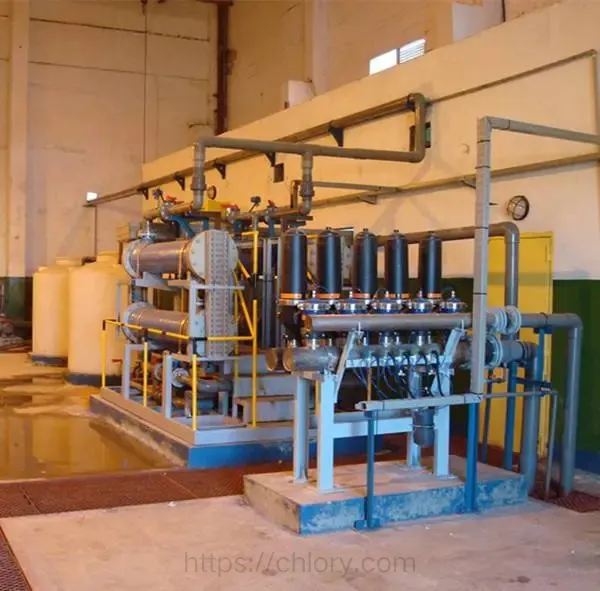 Read More
 -
Advances in Electrode Coating Technology for Chlorine Generation: Longer Life, Lower Overpotential
September 4, 2026An electrochlorination plant in the Middle East was drawing 4.9 kWh per kilogram of chlorine when its cells were new. Five years l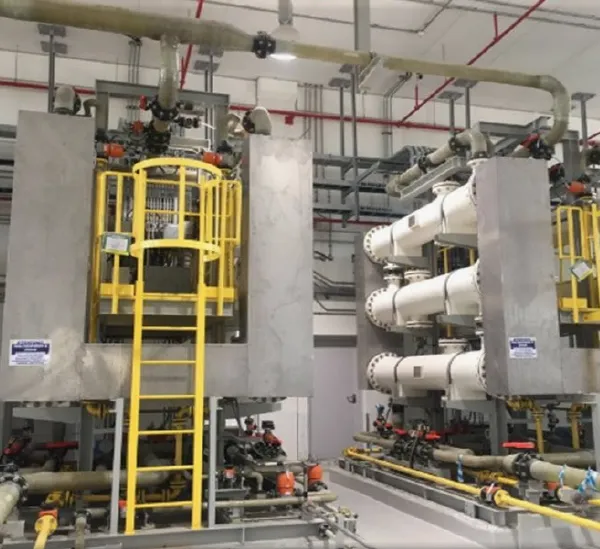 Read More
 -
Seawater Electrochlorination vs Chemical Dosing: A Cost and Safety Comparison for Cooling Water
September 3, 2026A desalination plant in the Gulf region was dosing bulk sodium hypochlorite into its cooling intake at a cost of $1,800 per truckl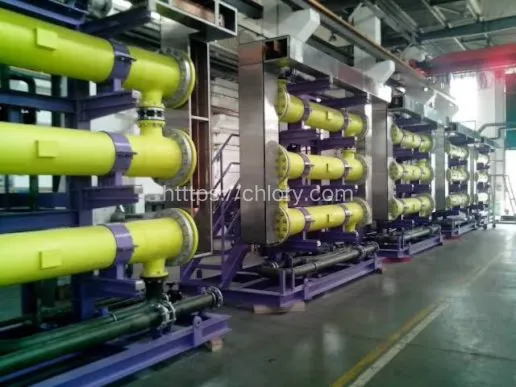 Read More
 -
Understanding Electrochlorination Technology: How Seawater Becomes a Disinfectant
September 2, 2026A coastal power plant in Southeast Asia discovered that a single season of heavy mussel growth inside its 1.6-meter cooling water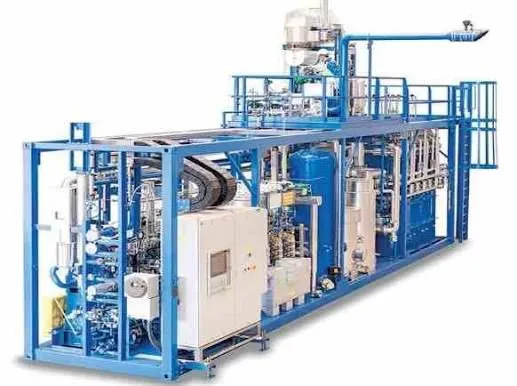 Read More

Contact Us
Recommended Products
-
 13% High Test Hypochlorite Machine for Heavy Duty DisinfectionUS$ 50000 - 300000MOQ: 1 Set
 -
9% On-Site Hypochlorite Generator for Bottled Water PlantsUS$ 50000 - 300000MOQ: 1 Set
-
14% High Purity Sodium Hypochlorite Plant for BleachingUS$ 50000 - 300000MOQ: 1 Combo
-
15% High Concentration Sodium Hypochlorite Generator for Water TreatmentUS$ 50000 - 300000MOQ: 1 Combo
-
15 Kg/h Seawater Electrolytic Antifouling System for RefineriesUS$ 50000 - 300000MOQ: 1 Set
-
0.1%-0.2% Electrochlorination Unit for Seawater Cooling AntifoulingUS$ 50000 - 300000MOQ: 1 Set
-
20 Kg/day Seawater Electrolysis Plant for Coastal Power PlantsUS$ 50000 - 300000MOQ: 1 Set
-
5 Kg/h Electrolytic Seawater System for Marine Ballast TreatmentUS$ 50000 - 300000MOQ: 1 Set
-
100 M³/h Electrolytic Seawater Antifouling System for LNG TerminalsUS$ 50000 - 300000MOQ: 1 Set
-
50 Ppm On-Site Sodium Hypochlorite Generator From SeawaterUS$ 50000 - 300000MOQ: 1 Set
-
Liquid Chlorine Equipment for Chlor-Alkali Production PlantUS$ 200000 - 2000000MOQ: 1 Set
-
Custom Chlor-Alkali Plant EPC Turnkey Solution for Integrated Chemical Manufacturing PlantUS$ 100000 - 2000000MOQ: 1 Set
-
99% High Purity Caustic Soda Flakes EPC Project for Fine Chemical & Metallurgical IndustryUS$ 100000 - 2000000MOQ: 1 Set
-
33% Industrial Hydrochloric Acid Production Equipment for Pickling & Wastewater TreatmentUS$ 100000 - 2000000MOQ: 1 Set
-
Industrial Liquid Chlorine Production & Storage Equipment for Chemical Synthesis & Water DisinfectionUS$ 100000 - 2000000MOQ: 1 Set
-
100kg/hour WPC80 Concentrated Whey Protein Powder Production Line Membrane Filtration Concentration EquipmentUS$ 50000 - 500000MOQ: 1 Set
-
Full-Automatic Beverage Processing Machinery Whole Production Line Membrane Clarification Membrane Filtration EquipmentUS$ 50000 - 500000MOQ: 1 Set
-
Instant Tea Whole Product Line Membrane Filtration, Concentration and Dehydration EquipmentUS$ 50000 - 500000MOQ: 1 Set
-
Goat Milk Sterilization and Concentration SystemUS$ 50000 - 500000MOQ: 1 Set
-
Sanitary Nanofiltration Membrane Dealcoholization System Low Alcohol Wine Beer Filtration EquipmentUS$ 50000 - 500000MOQ: 1 Set