
 Business License

What Is a Sodium Hypochlorite Generator: How On-Site Electrolysis Produces NaClO for Water Disinfect
When monsoon rains washed out the only road to a 200,000 m³/day municipal wastewater plant, the facility's bulk chlorine supply ran dry in 48 hours. With a 72-hour minimum lead time for the next delivery, partially treated effluent flowed into receiving waters for three days. The regulatory penalty exceeded $180,000. An on-site sodium hypochlorite generator, the post-incident review determined, would have eliminated the single-point failure entirely.
1. What Is Sodium Hypochlorite and Why Water Treatment Depends on It
Sodium hypochlorite (NaClO) is a chlorine-based oxidizing compound that has served as the backbone of water disinfection for more than a century. When dissolved in water, it releases hypochlorous acid (HOCl) and hypochlorite ions (OCl⁻), both potent biocides that destroy bacteria and viruses by penetrating cell walls and disrupting enzymatic function. The HOCl-to-OCl⁻ ratio depends on pH — at pH 6.5, roughly 90% exists as the more effective HOCl, while at pH 8.5, OCl⁻ dominates at around 75%.
What many plant operators overlook is how quickly commercial sodium hypochlorite degrades. A batch of 12.5% NaClO stored at 25°C loses roughly 30% of its available chlorine within 14 days. At 35°C, typical in tropical regions, that accelerates to roughly 50%. A single 20,000-liter bulk delivery can drop from 12.5% to below 8% before consumption, forcing operators to compensate with higher dosing rates.
2. The Supply Chain Problem On-Site Generation Solves
Bulk sodium hypochlorite is classified as a corrosive hazardous material (UN 1791), imposing restrictions on container types, route planning, and storage design. Every supply-chain link — manufacturer, distributor warehouse, end-user storage — is a potential failure point. Road closures, port congestion, or plant maintenance shutdowns can interrupt supply for days. Roughly 15% of North American water utilities reported sodium hypochlorite delivery delays exceeding 7 days during 2020–2022 disruptions.
On-site generation eliminates this chain by producing disinfectant at the point of use from three non-hazardous inputs: food-grade salt, water, and electricity. A facility removes transportation risk, avoids chemical degradation during storage, and operates independently of external suppliers. A 2018 incident at a Southeast Asian water facility — where a corroded bulk tank released roughly 8,000 liters of hypochlorite into a drainage channel, resulting in cleanup costs exceeding $400,000 — further illustrates why the safety argument alone drives adoption.
3. How an On-Site Generator Works: The Electrolysis Process
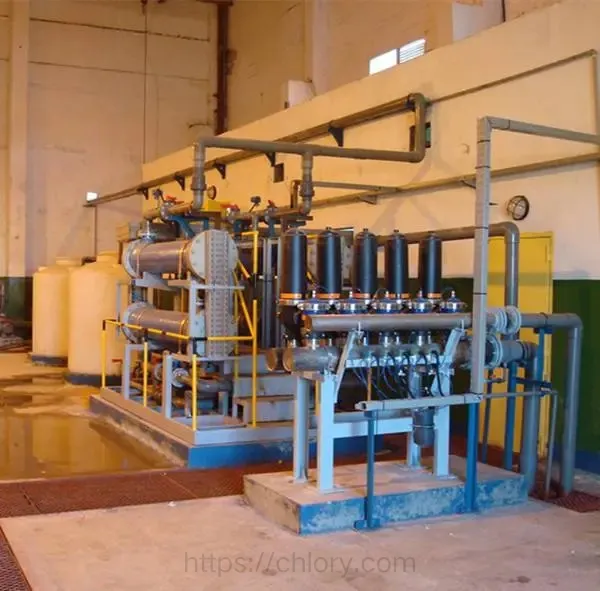
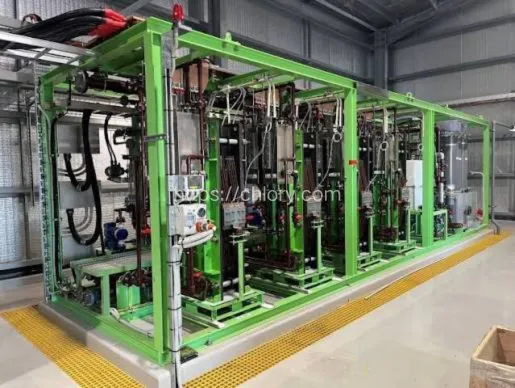
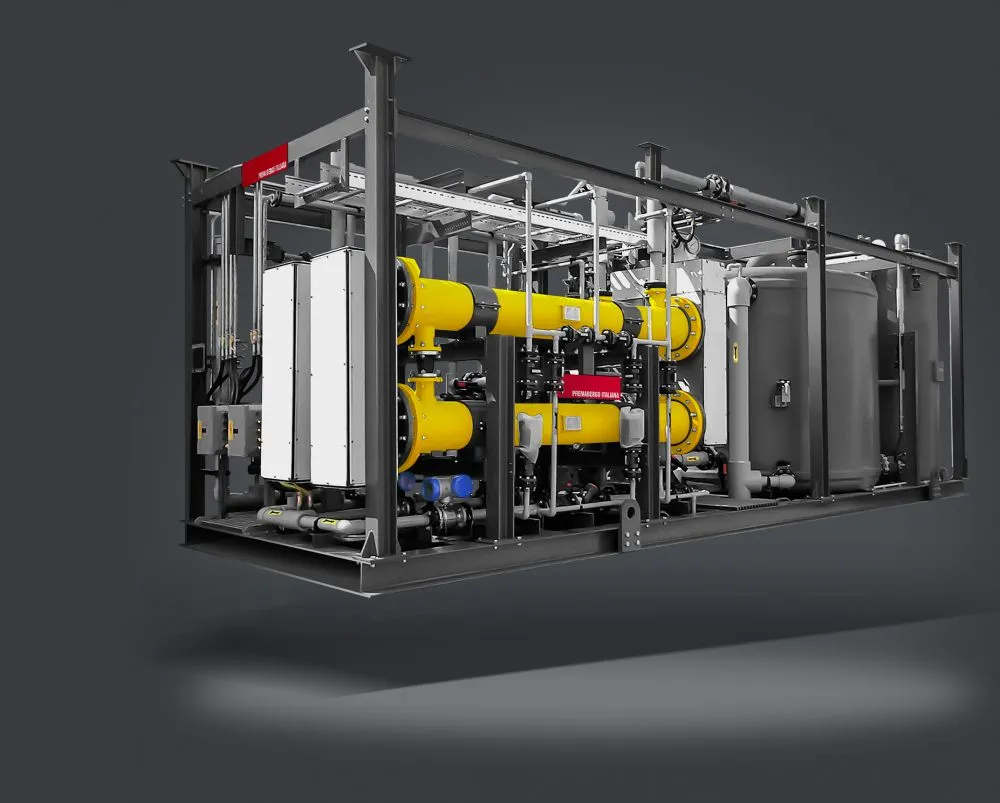
A sodium hypochlorite generator applies a controlled DC current to a brine solution to produce NaClO through four stages. First, softened water is mixed with high-purity salt — vacuum-grade NaCl with calcium and magnesium combined below 20 ppm — to create brine at roughly 3% to 5% concentration. A brine tank with level sensor and conductivity monitor ensures consistent feed quality. Hard water must be softened upstream; calcium and magnesium ions foul the cathode surface and reduce electrolysis efficiency by 15% to 20% within weeks of operation if untreated.
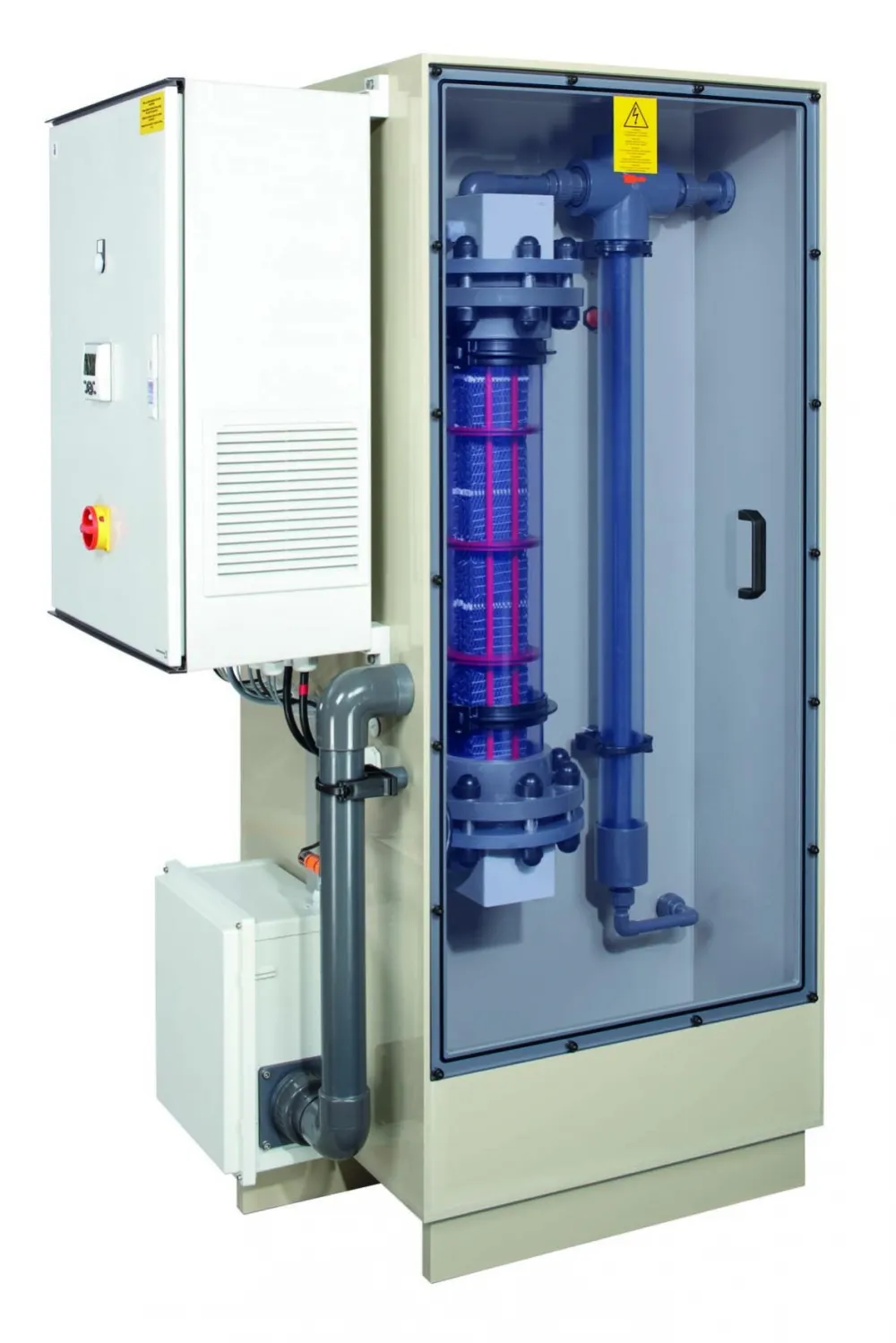
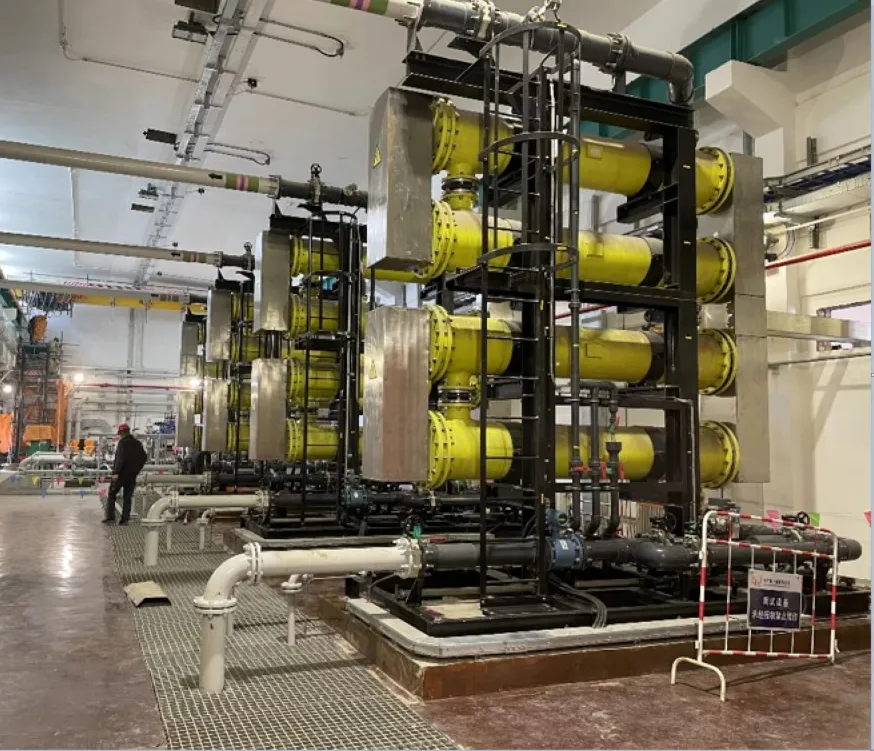
Second, the brine enters an electrolytic cell where a DC power supply applies roughly 3 to 5 volts across a set of electrodes. The anode — a titanium substrate coated with mixed metal oxides (MMO), typically a combination of ruthenium dioxide and iridium dioxide — catalyzes the oxidation of chloride ions (Cl⁻) to chlorine gas. At the cathode, typically titanium or Hastelloy, water is reduced to hydrogen gas and hydroxide ions. The chlorine immediately reacts with the sodium hydroxide generated at the cathode to form NaClO: Cl₂ + 2NaOH → NaClO + NaCl + H₂O.
Third, the NaClO solution exits the cell at a concentration determined by brine strength, current density, and residence time. Low-concentration generators produce 0.6% to 0.8% NaClO; high-concentration systems reach 12% to 15% using recirculation with integrated cooling. Hydrogen byproduct — roughly 0.028 kg per kg of Cl₂ — is diluted to below 2% by volume (half the 4% lower explosive limit) and safely vented through a forced-air system with continuous H₂ monitoring.
Fourth, the product flows into an HDPE or fiberglass-reinforced plastic day tank designed for 24 to 48 hours of peak consumption. Metering pumps dose the solution into the treated water stream, with a residual chlorine analyzer providing feedback to trim the dose and maintain the target residual — typically 1 to 5 mg/L for wastewater and 0.5 to 2 mg/L for drinking water.
4. Low-Concentration vs High-Concentration Generators
Generators fall into two categories based on output concentration. Low-concentration units produce 0.6% to 0.8% NaClO through single-pass brine flow, used directly without recirculation. They are mechanically simpler, consuming 4.0 to 5.5 kWh per kilogram of equivalent chlorine. However, a facility consuming 50 kg/day needs roughly 6,250 liters of product storage versus only 400 liters for 12.5% commercial product.
High-concentration generators produce 12% to 15% NaClO through a recirculating brine loop with integrated cooling that maintains cell temperature at 20°C to 30°C. Energy consumption runs 5.5 to 7.0 kWh/kg Cl₂, but storage volume is an order of magnitude smaller. These suit facilities with space constraints or multi-day buffer requirements. The concentration choice cascades into the entire plant design. A 0.8% system feeding a drinking water plant with 100 kg/day chlorine demand requires roughly 12,500 liters of product storage; the same demand met by a 12% system requires roughly 830 liters. The trade-off is higher capital and electrical cost for high-concentration versus larger footprint and salt consumption for low-concentration. In our project experience, roughly 60% of municipal clients choose low-concentration for operational simplicity, while industrial users with limited floor space favor high-concentration.
5. Key Components and Their Impact on System Life
| Component | Material / Spec | Life Impact |
|---|---|---|
| Electrolytic cell | Acrylic, PVC-C, or PVDF; rated 3–6 bar | Body cracking from thermal cycling is the most common failure after 7–10 years |
| Anode (MMO-coated Ti) | RuO₂-IrO₂ coating, 5–20 μm thick | Coating wear determines replacement interval; 5-year vs 8-year warranties reflect coating quality |
| DC rectifier | SCR or IGBT; ripple ≤5% | Rectifier failures account for roughly 20% of service calls |
| Brine preparation | Softener + conductivity monitor | Inadequate softening increases maintenance frequency by roughly 30% |
| Hydrogen vent system | Forced-air blower + H₂ sensor | Sensor calibration drift after roughly 2 years; annual recalibration recommended |
The electrolytic cell and anode represent roughly 40% to 50% of total system cost. Tianjin Bluewav Technology Co.,ltd designs cells with electrode spacing optimized at roughly 3 to 4 mm — a balance between gas bubble clearance and electrical resistance that directly affects kWh consumed per kilogram of chlorine produced.
6. Cost Comparison: On-Site Generation vs Bulk Supply
For a facility consuming 100 kg/day of equivalent chlorine over 350 days per year: bulk 12.5% NaClO at $0.60/kg delivered costs roughly $42,000 in chemical, $9,200 in storage, dosing equipment, and handling labor — totaling roughly $51,200 annually. A 0.8% on-site generator costs roughly $8,500 in salt (at $0.12/kg, 3.5 kg salt per kg Cl₂), $16,000 in electricity (5.0 kWh/kg at $0.09/kWh), $12,000 in amortized capital, and $9,000 in labor — roughly $45,500 total. The on-site path delivers annual savings of roughly $5,700 at these rates.
The numbers shift with local conditions. Where electricity exceeds $0.12/kWh and bulk chemical is below $0.50/kg, bulk retains a cost edge. Where power is cheap and delivery distances are long — we have seen delivered bulk prices exceed $2.00/kg at remote mining operations — on-site generation wins by a factor of 3 to 1. A single consent decree penalty can exceed the entire generator capital cost, making the compliance-insurance value the true economic driver for plants above roughly 50,000 m³/day.
7. Application Examples
Municipal wastewater represents the largest installed base. A mid-sized 100,000 m³/day plant targeting 200 CFU/100 mL fecal coliform consumes 500 to 2,000 kg/day of equivalent chlorine, with generators typically N+1 configured for redundancy. Effluent quality directly affects dose: TSS above 10 mg/L approximately doubles the chlorine required compared to TSS below 5 mg/L.
Drinking water uses NaClO for both primary disinfection and distribution residual maintenance at 0.2 to 2.0 mg/L. The absence of chlorate byproduct formation — a known issue with aged bulk hypochlorite — is critical as chlorate limits tighten from 0.7 to 0.25 mg/L in several jurisdictions.
Industrial cooling depends on chlorine biocides to control biofilm in towers and heat exchangers. A 10,000-ton cooling system requires 20 to 50 kg/day during summer peak, with automated ORP control enabling unattended off-shift operation.
8. Case Studies
A 300,000 m³/day Southeast Asian municipal plant, after three typhoon-related supply disruptions in a single season that incurred roughly $95,000 in penalties, installed a 0.8% generator sized for 300 kg/day equivalent chlorine. Total installed cost: roughly $380,000 including brine preparation, electrolyzer skids, product storage, and SCADA integration. Commissioned in 2021, the system has operated more than 8,000 hours with two scheduled anode inspections. Salt consumption averaged 3.3 kg/kg Cl₂, electricity 4.7 kWh/kg. Annual disinfection cost dropped roughly 30%, with simple payback achieved in roughly 3 years.
A beverage bottling plant installed a compact 50 kg/day unit after a $250,000 product recall traced to degraded bulk hypochlorite stored beyond its effective shelf life. The $55,000 installation paid for itself within the first year.
9. Operational Essentials
Three variables dominate day-to-day economics. Energy consumption varies with brine concentration and water temperature — a generator at 15°C consumes roughly 10% more than at 25°C. Electrode aging increases consumption gradually: a cell drawing 4.5 kWh/kg Cl₂ when new may draw 5.2 kWh/kg after roughly 4 years. Salt quality is the silent variable: solar salt with 0.3% calcium and 0.1% magnesium fouls cells roughly 3 times faster than vacuum-grade salt below 20 ppm total hardness. The cost differential — roughly $0.08/kg for solar versus $0.14/kg for vacuum salt — is dwarfed by increased cleaning frequency and shortened anode life.
Preventive maintenance — acid cleaning every 3 to 6 months, softener regeneration every 500 to 1,000 m³, hydrogen sensor calibration annually — typically delivers operational availability above 95%. Most unscheduled downtime, roughly 65% in our service records, traces back to deferred cleaning, not component failure.
10. Frequently Asked Questions
10.1 How long does an anode last?
Standard MMO-coated titanium anodes operating at 1,500 to 2,500 A/m² typically deliver 5 years before coating depletion reduces efficiency below 80% of baseline. Premium anodes with higher noble metal loading — roughly 18 to 22 g/m² versus 12 to 15 g/m² — can extend this to 8 years. Monitoring cell voltage trend provides early warning: a gradual 5% to 8% rise over the rated lifespan is normal; a sudden 15% increase signals localized coating failure.
10.2 How much salt does a generator consume?
The stoichiometric minimum is 1.65 kg NaCl per kg equivalent chlorine. In practice, consumption ranges from 3.0 to 3.8 kg/kg Cl₂, with excess from unreacted brine carryover. High-concentration generators are slightly more efficient at 3.0 to 3.3 kg/kg due to recirculation. Vacuum-grade salt (≥99.5% NaCl, ≤20 ppm Ca+Mg) is strongly recommended to minimize electrode fouling.
10.3 Is on-site generation safe?
Yes — it eliminates hazmat transport and bulk storage, the primary safety concerns. The only unique consideration is hydrogen management: roughly 0.028 kg H₂ per kg Cl₂ produced must be diluted below 2% by volume and safely vented. Commercial generators include forced-air blowers and hydrogen sensors with automatic interlocks.
10.4 What concentration does an on-site generator produce?
Low-concentration units produce 0.6% to 0.8% available chlorine. High-concentration units produce 12% to 15%. The concentration is determined by cell design — single-pass versus recirculating flow with cooling — and cannot be retrofitted from one type to the other without replacing the cell assembly and adding a chiller circuit.
10.5 What is the typical payback period for switching to on-site generation?
Typical payback ranges from 18 to 36 months at consumption rates above roughly 50 kg/day Cl₂ equivalent. The three largest variables are delivered bulk chemical price, local electricity rate, and annual operating hours. Rapid payback under 24 months is common with bulk prices above $0.70/kg and electricity below $0.10/kWh. Where bulk is below $0.40/kg and electricity above $0.15/kWh, payback may extend to 4 to 5 years, though safety and reliability benefits often justify the investment regardless.
Recently Posted
-
Tianjin Bluewav Technology: A Full-Spectrum Manufacturer of On-Site Disinfectant Generation and Chlo
August 13, 2026When a coastal power plant in Southeast Asia needed a seawater electrochlorination system producing 200 kg/day of equivalent chlor Read More
 -
Municipal Wastewater Disinfection with On-Site Sodium Hypochlorite: Design Considerations and Case S
August 13, 2026During a 2020 wet-weather event, a municipal wastewater plant serving roughly 400,000 people exceeded its fecal coliform permit li Read More
 -
Electrolyzer Cell Quality and Anode Lifespan: What Determines 5-Year vs 8-Year Service Life
August 12, 2026In 2021, a sodium hypochlorite generator at a Middle Eastern industrial facility experienced a 42% drop in chlorine production eff
Read More -
Membrane Cell vs Diaphragm Cell Chlor-Alkali Technology: Which Process Suits Your Plant
August 10, 2026In 2016, a chlor-alkali facility in South Asia experienced a catastrophic asbestos diaphragm failure in two of its 48 cells. The 1 Read More

Contact Us
Recommended Products
-
 13% High Test Hypochlorite Machine for Heavy Duty DisinfectionUS$ 50000 - 300000MOQ: 1 Set
 -
9% On-Site Hypochlorite Generator for Bottled Water PlantsUS$ 50000 - 300000MOQ: 1 Set
-
14% High Purity Sodium Hypochlorite Plant for BleachingUS$ 50000 - 300000MOQ: 1 Combo
-
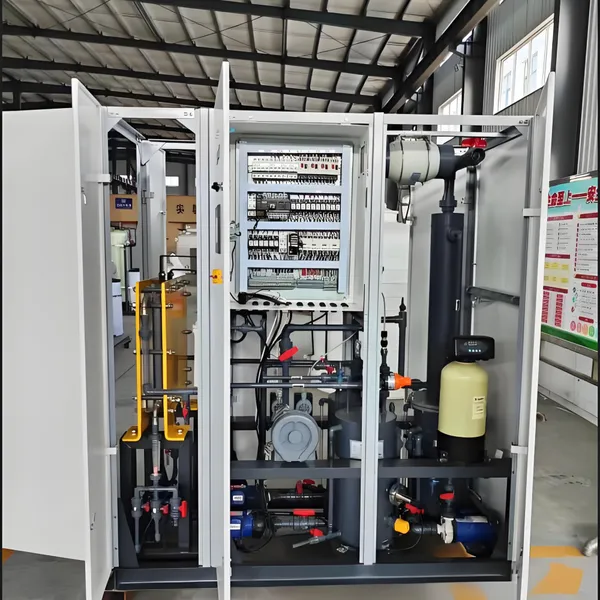
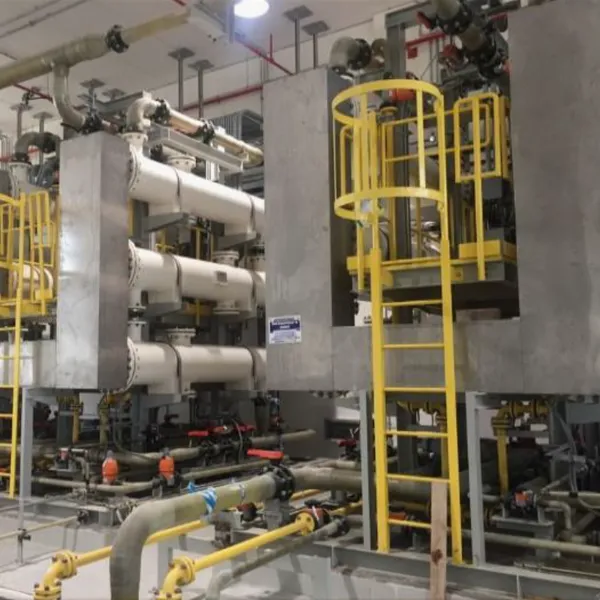
15% High Concentration Sodium Hypochlorite Generator for Water TreatmentUS$ 50000 - 300000MOQ: 1 Combo
-
15 Kg/h Seawater Electrolytic Antifouling System for RefineriesUS$ 50000 - 300000MOQ: 1 Set
-
0.1%-0.2% Electrochlorination Unit for Seawater Cooling AntifoulingUS$ 50000 - 300000MOQ: 1 Set
-
20 Kg/day Seawater Electrolysis Plant for Coastal Power PlantsUS$ 50000 - 300000MOQ: 1 Set
-
5 Kg/h Electrolytic Seawater System for Marine Ballast TreatmentUS$ 50000 - 300000MOQ: 1 Set
-
100 M³/h Electrolytic Seawater Antifouling System for LNG TerminalsUS$ 50000 - 300000MOQ: 1 Set
-
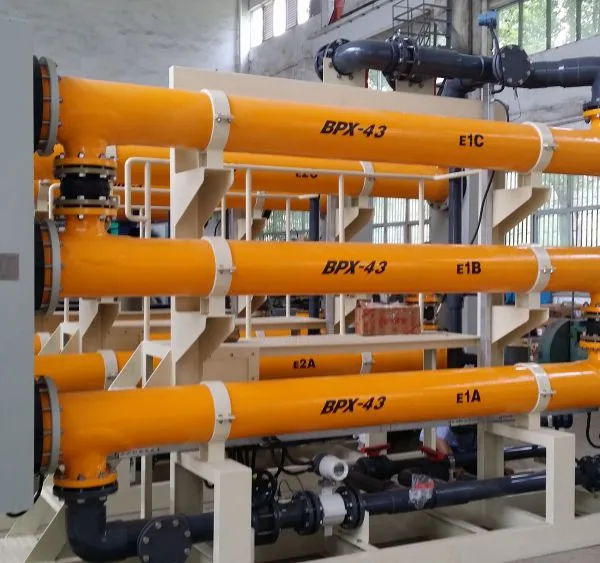
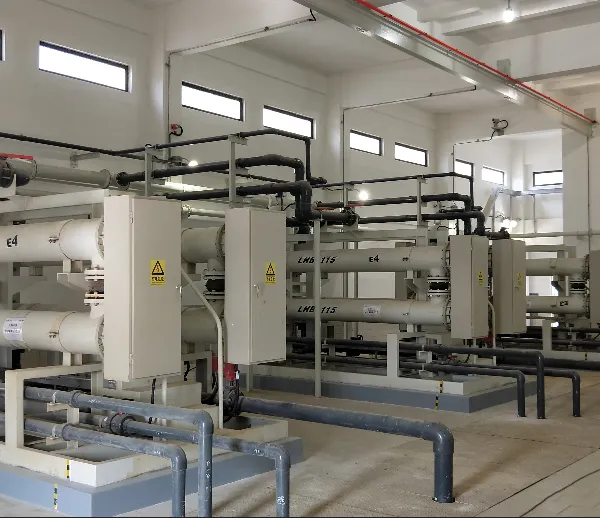
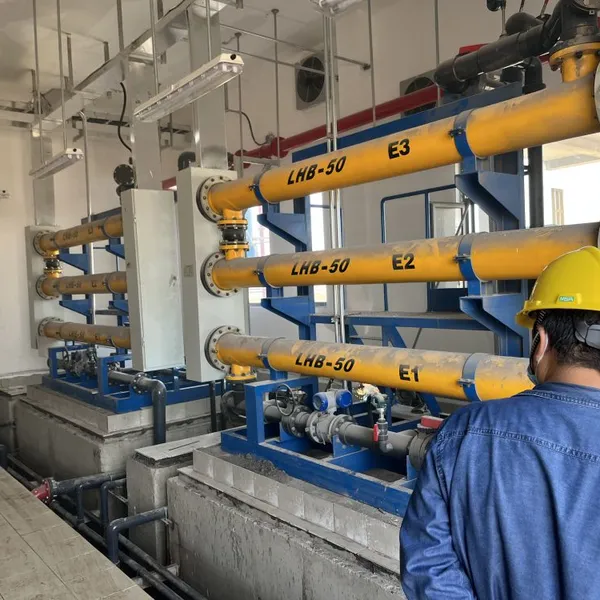
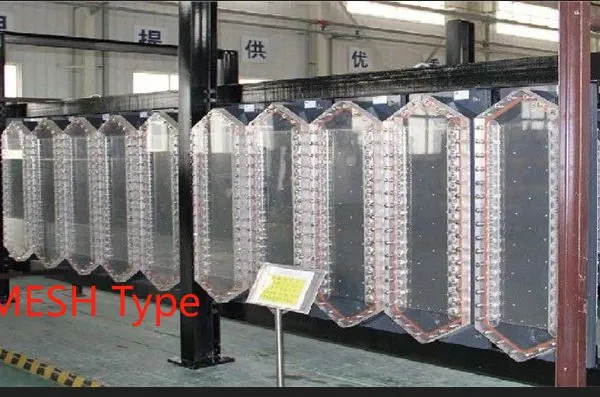
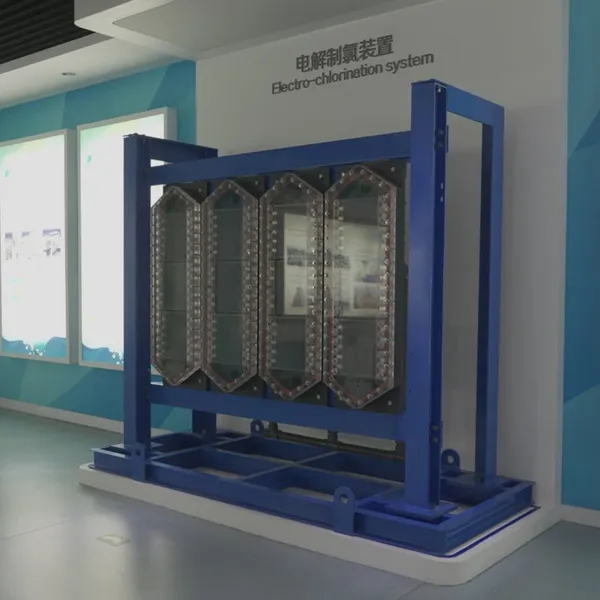
50 Ppm On-Site Sodium Hypochlorite Generator From SeawaterUS$ 50000 - 300000MOQ: 1 Set
-
Liquid Chlorine Equipment for Chlor-Alkali Production PlantUS$ 200000 - 2000000MOQ: 1 Set
-
Custom Chlor-Alkali Plant EPC Turnkey Solution for Integrated Chemical Manufacturing PlantUS$ 100000 - 2000000MOQ: 1 Set
-
99% High Purity Caustic Soda Flakes EPC Project for Fine Chemical & Metallurgical IndustryUS$ 100000 - 2000000MOQ: 1 Set
-
33% Industrial Hydrochloric Acid Production Equipment for Pickling & Wastewater TreatmentUS$ 100000 - 2000000MOQ: 1 Set
-
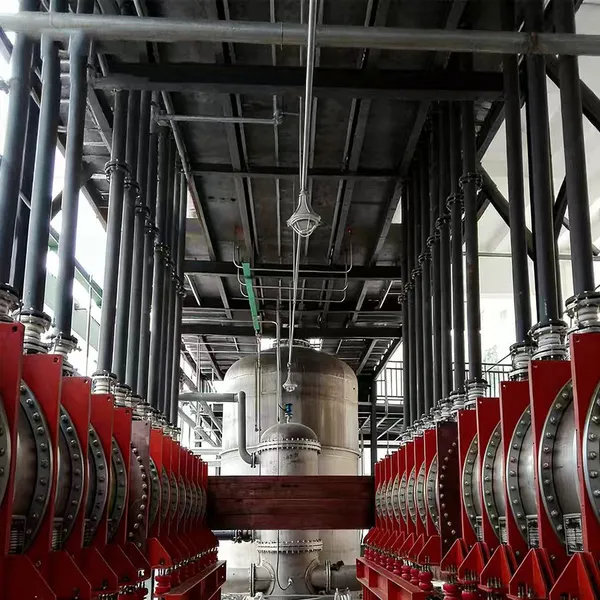
Industrial Liquid Chlorine Production & Storage Equipment for Chemical Synthesis & Water DisinfectionUS$ 100000 - 2000000MOQ: 1 Set
-
100kg/hour WPC80 Concentrated Whey Protein Powder Production Line Membrane Filtration Concentration EquipmentUS$ 50000 - 500000MOQ: 1 Set
-
Full-Automatic Beverage Processing Machinery Whole Production Line Membrane Clarification Membrane Filtration EquipmentUS$ 50000 - 500000MOQ: 1 Set
-
Instant Tea Whole Product Line Membrane Filtration, Concentration and Dehydration EquipmentUS$ 50000 - 500000MOQ: 1 Set
-
Goat Milk Sterilization and Concentration SystemUS$ 50000 - 500000MOQ: 1 Set
-
Sanitary Nanofiltration Membrane Dealcoholization System Low Alcohol Wine Beer Filtration EquipmentUS$ 50000 - 500000MOQ: 1 Set